History Timeline

Click on each of the years decades below and then expand each year to read about our illustrious history.

1926

Once Upon A Time

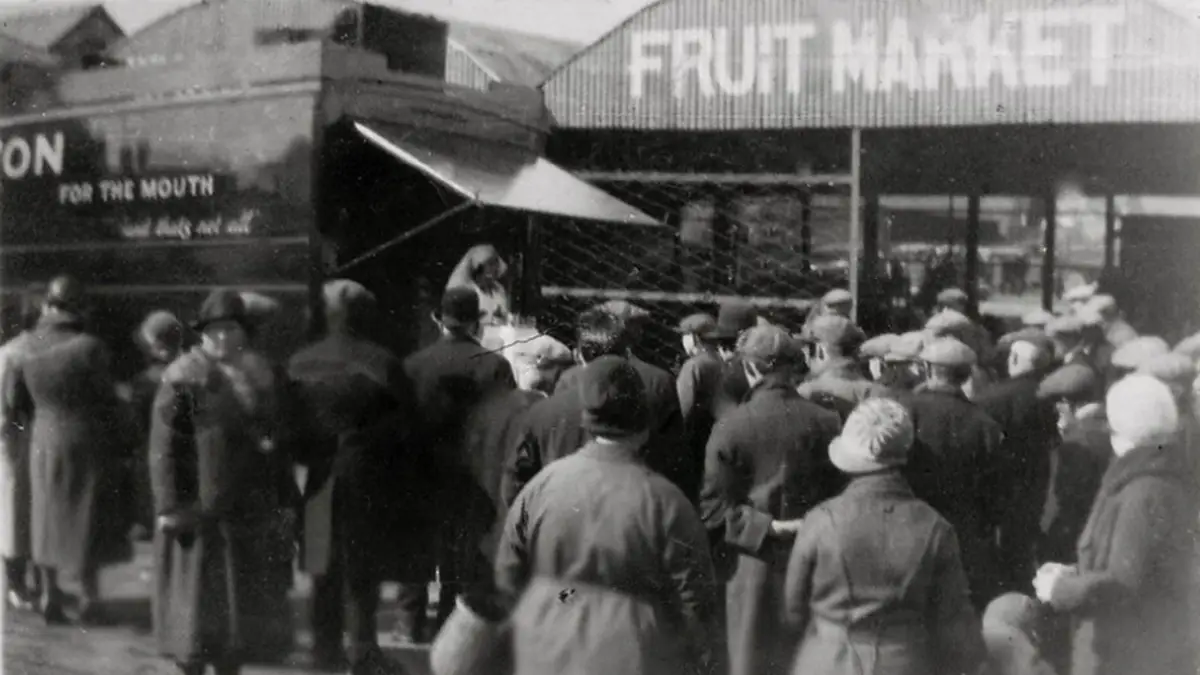
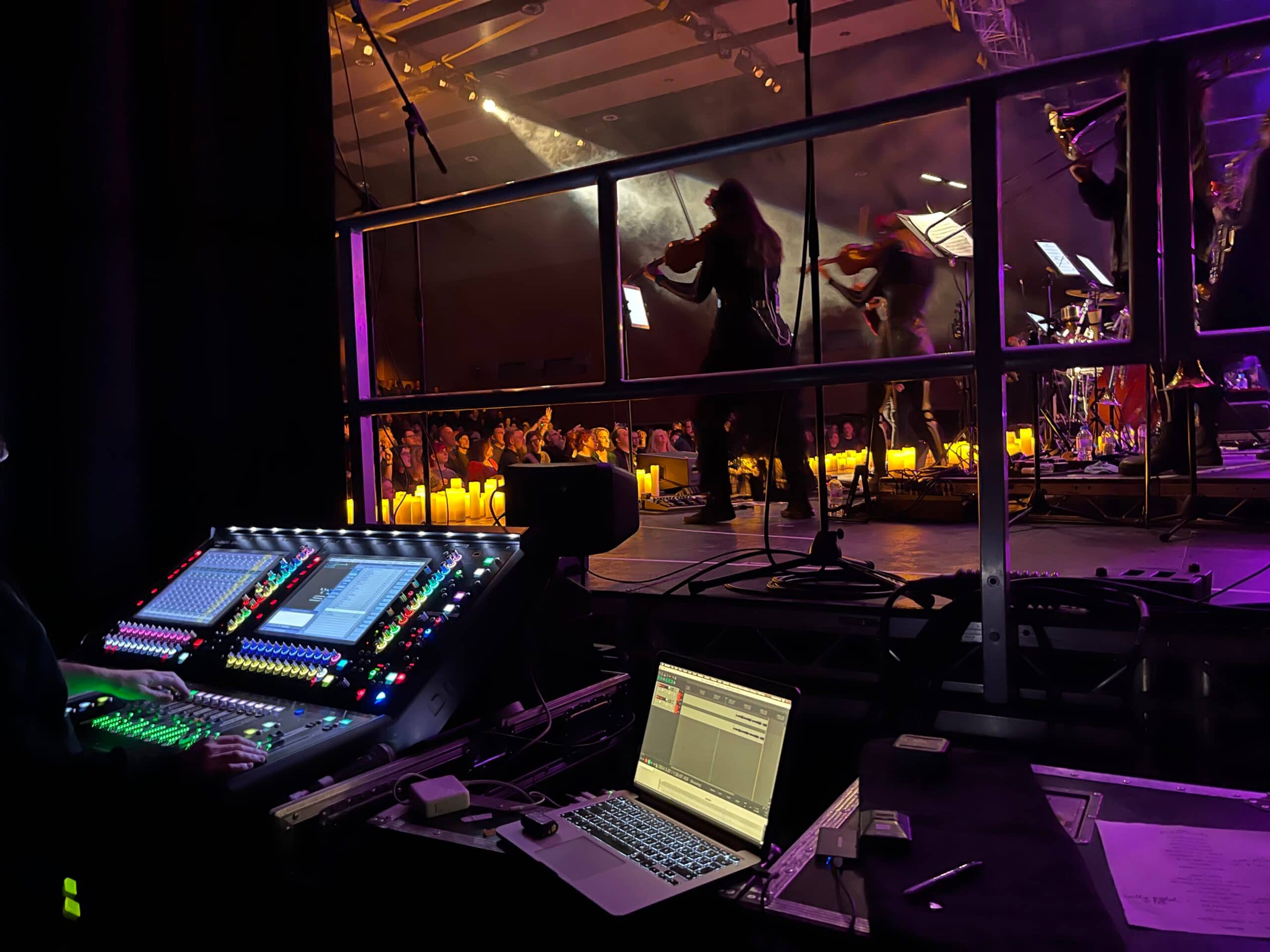
The journey of RG Jones began in 1926. Ronald Godfrey Jones was born in Caerphilly, South Wales and from an early age he loved to invent and build gadgets. Completely self-taught, he possessed a natural talent for carpentry and metalwork, mastering the construction of a power amplifiers alongside various other electronic devices. Known as RG, Reg or Geoff, he left school early and set off on the road as a travelling salesman for Milton Antiseptic, promoting and selling the product in town market squares around Wales.

This was a two crew tour as Milton vans also had nurse along to advise mothers. RG became aware that Nurse Nora was struggling to be heard above the other market traders and crowds. He built a microphone and amplifier system, crafting a horn cabinet to house a 12-inch loudspeaker and mounting it onto his vehicle – the flares constructed entirely by him out of bits of timber. Inside, he installed a microphone connected to an amplifier powered by four 12V batteries and a rotary (48V to 230V) convertor. The results were revolutionary — Nora’s voice cut through the market noise with crystal clarity, drawing in crowds.

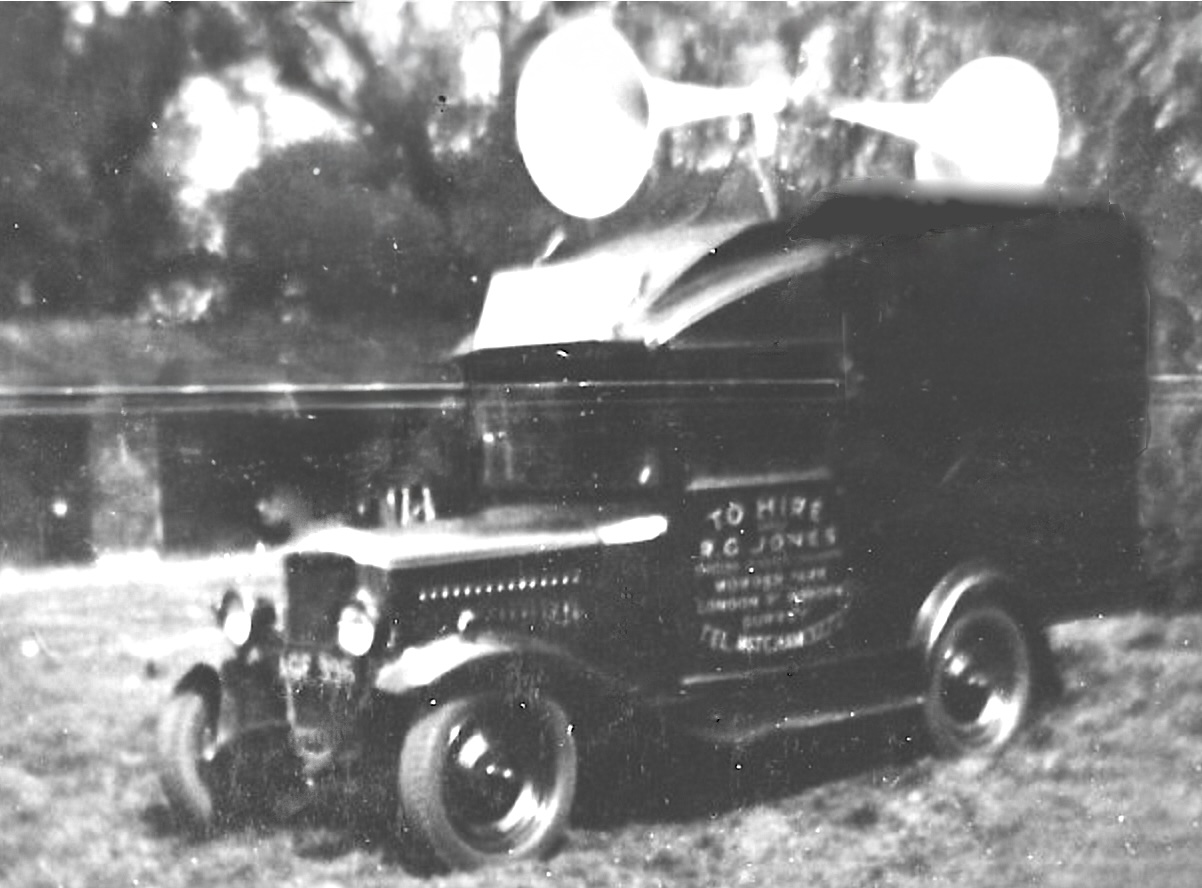
Milton saw sales soar and commissioned RG to equip five more vehicles with his pioneering idea. RG left Milton, marry Nurse Nora and invested in an old Standard car, launching a mobile advertising business to broadcast through the streets.

1926 – Queen Elizabeth II was born, the BBC was barely formed and Stalin was just in power – young RG Jones went into business for himself with a sound vision.

1928

From the Valleys of Wales to the Heart of London’s Theatre

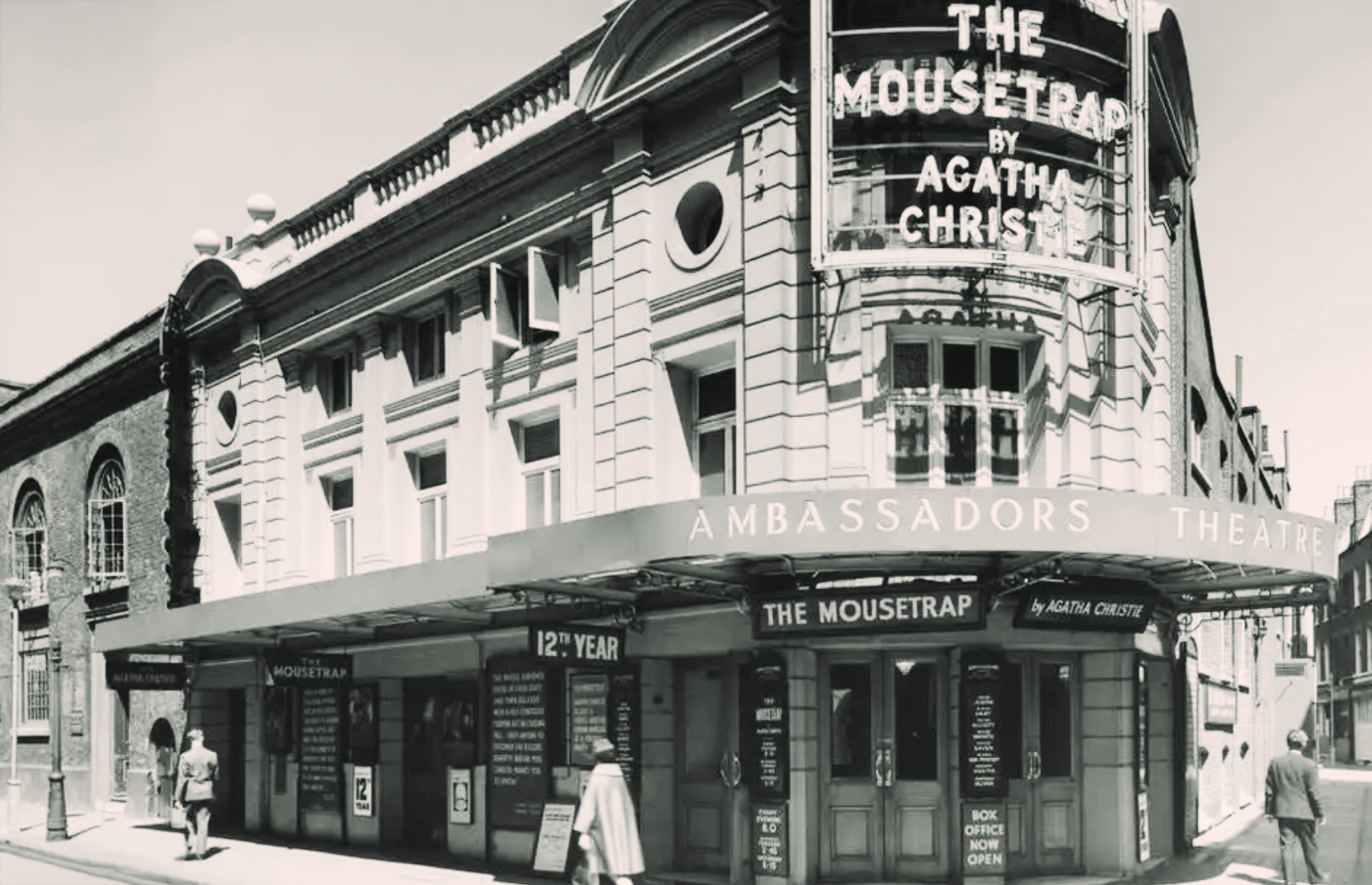
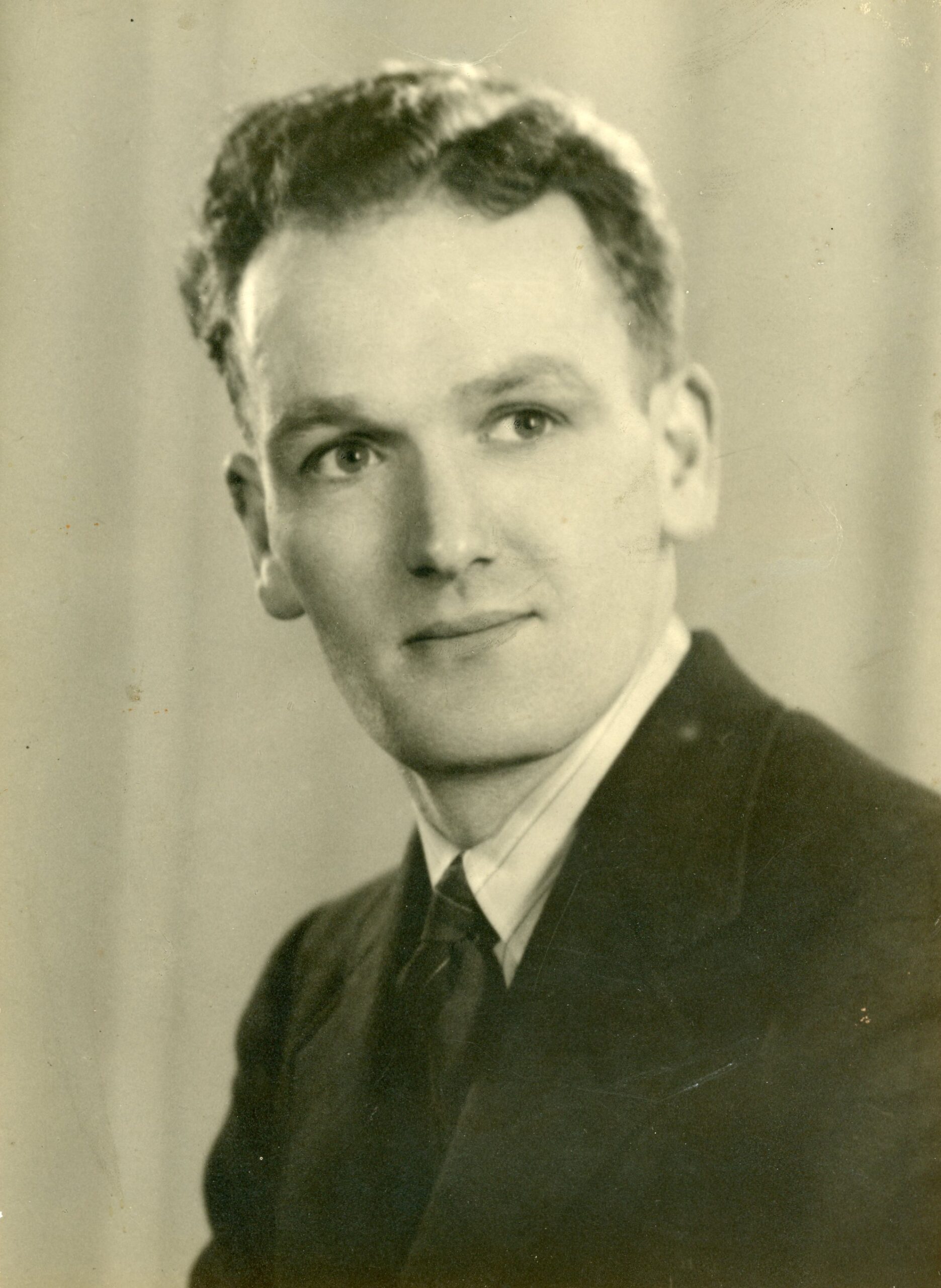
By 1928, RG Jones was flourishing—but he knew the real opportunities lay in London. He and Nora, now married, moved into a rented basement flat in Hammersmith. One evening, while watching a play at the Old King’s Head Theatre, they found themselves in the Gods (upper balcony)—struggling to hear the actors’ voices. Ever the innovator, RG saw a solution where others saw a problem. He wrote to the theatre manager, proposing an ambient microphone system that would amplify the actors’ voices to loudspeakers installed in the balcony. The manager agreed, and the first theatre sound reinforcement system was born.

RG’s breakthrough revolutionised London’s theatre scene. By the late 1950s, his company had sound installations in every major theatre in London—except The Criterion. His equipment remained in use well into the mid-1960s, a testament to his commitment to quality, longevity, and innovation in professional audio.
1929

1929 - It Speaks with a Mighty Voice – Writer, Producer, Recordist

By 1929, RG Jones was proving he was more than just an engineer—he was a storyteller and innovator, pushing the boundaries of sound in live productions.

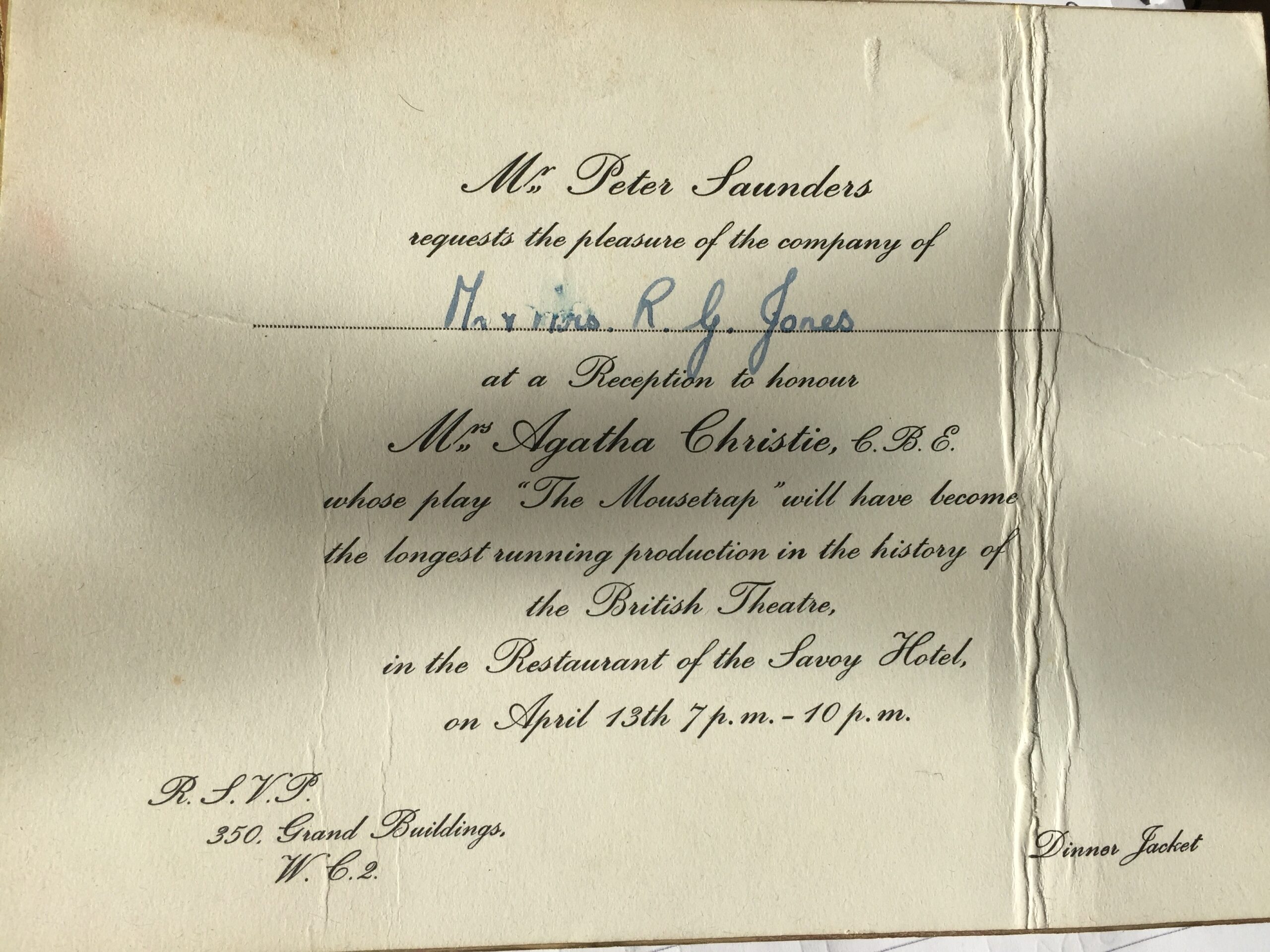
That year, he wrote, produced, and recorded the historical pageant “The Storming of Quebec” at Belle Vue, Manchester. The production was groundbreaking—staged on a massive island in a lake, with a life-sized replica of Quebec, an audience seated on the opposite shore, and a cast of over 100 performers.

For the first time, pre-recorded audio was seamlessly integrated into a large-scale production, with performers miming to the soundtrack. The show was a technical triumph, featuring:

  • Explosive pyrotechnics, heightening battle sequences
  • Beautifully designed period costumes and sets
  • Cutting-edge sound equipment, ensuring crystal-clear audio

Following its resounding success, RG produced “The Siege of Lucknow” the following year, further cementing his pioneering role in immersive live audio experiences.

At a time when cinema was transitioning to sound, RG was already proving how technology and storytelling could merge to create unforgettable audience experiences.

1931

The Jewel In Our Crown

By 1931, RG Jones had already established himself as a pioneer in sound engineering. But it was his work with the iconic Marconi microphone that would secure his place in broadcasting history.

A revolution in global communication, Guglielmo Marconi’s wireless technology proved that voices could travel vast distances without wires, laying the foundation for modern radio. His relentless innovation earned him a Nobel Prize, forever transforming how the world stayed connected.

Much like Marconi, RG Jones was a self-taught visionary, dedicated to perfecting the clarity of sound. His beloved Marconi microphone played a crucial role in recording King George VI’s wartime broadcasts to the Commonwealth during World War II – ensuring that messages of hope, unity, and resilience were heard across the globe.

This legendary microphone also captured the voices of some of the most influential figures of the era, including:

  • Her Majesty Queen Mary
  • Her Majesty Queen Elizabeth
  • Sir Winston Churchill
  • Earl Mountbatten
  • His Royal Highness Prince Philip
  • Sir Harold Macmillan
  • Sir Alec Douglas-Home

While Marconi’s innovations made long-distance communication possible, RG Jones amplified voices across theatres, stadiums, and historic moments, ensuring every word carried weight and clarity.

Both men embodied ingenuity, problem-solving, and a passion for sound, demonstrating that with vision and determination, sound could shape history.

By Guglielmo Marconi – Retrieved January 28, 2016 from Guglielmo Marconi, “Looking back over thirty years of radio”, Radio Broadcast magazine, Doubleday, Page, and Co., New York, Vol. 10, No. 1, November 1926, p. 31 on http://www.americanradiohistory.com, Public Domain, https://commons.wikimedia.org/w/index.php?curid=46666904

1935

Magnet Publicity – The Power of Sound in Advertising

By 1935, RG Jones had already proven himself as a technical innovator, but he was also a savvy businessman. He understood that companies were struggling to recover from the 1929 Wall Street Crash, and in an era of fierce competition, businesses needed to stand out and be heard.

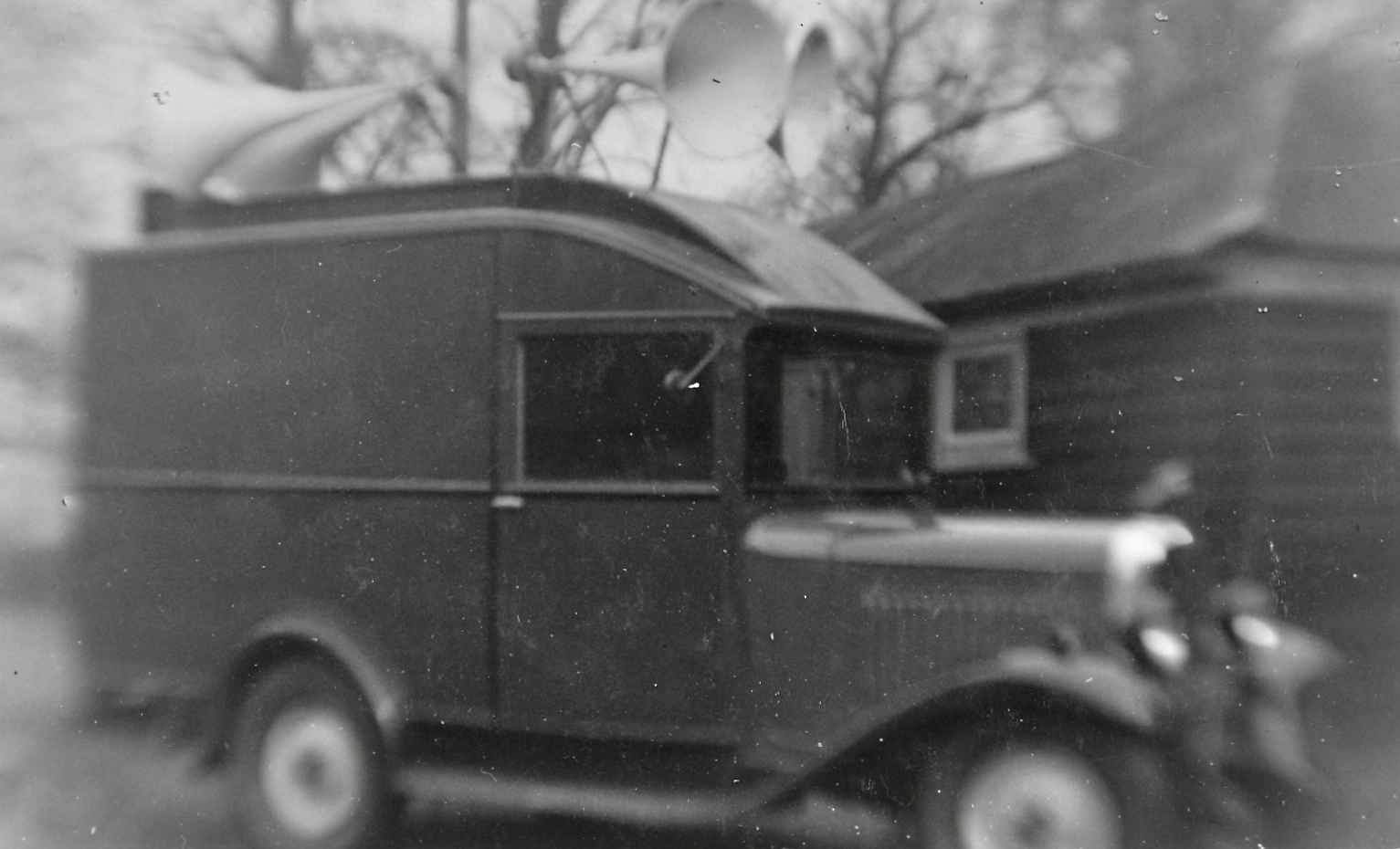
Seeing an opportunity, RG invested in his own mobile sound van—offering amplified advertising services to companies looking to reach the public in a bold new way. Magnet Publicity Broadcasting was born.

Businesses hired RG Jones to promote their products with amplified sound
Candle King paid £12 and 12 shillings—a sizeable fee at the time (see invoice)
Mobile audio advertising became a game-changer for brands

This move wasn’t just about business—it was about innovation, independence, and putting people first. Long before the digital age, RG Jones was pioneering amplified brand messaging, proving once again that great sound creates impact.

1939

The Outbreak of War Alters Direction

 “Never give up, never surrender.” – Winston Churchill

In 1939, war changed everything. RG and Norah had settled in Balham, and business was thriving—until the outbreak of WWII. As Britain braced for conflict, work dried up overnight. With little choice, RG and Norah returned to caravan life, parking up in an orchard in Morden Park. The future looked bleak, and RG was forced to sell razor blades on the streets just to make ends meet.

The world was watching. Germany invaded Poland, and Britain was at war. Just a year earlier, Orson Welles’ radio broadcast of The War of the Worlds had sent America into panic—but now, real war loomed. The situation escalated when Japan attacked Pearl Harbor, pulling the United States into the conflict.

Turning War into Opportunity – Sound for the War EffortAmidst uncertainty, RG’s ingenuity found a way forward. He secured a government contract to install sound systems in buses for the Red Cross, helping with blood transfusion work. Slowly, business picked up, and RG Jones PA systems became a vital part of the war effort, used by:

The Red Cross – Mobile medical support
The Home Guard – Defence and communication
Liverpool Docks – Controlling the arrival of thousands of American troops

He was also contracted to refit Green Line coaches, which were repurposed for the American Red Cross and renamed “Clubmobiles.” These vehicles were painted battleship grey and transformed into mobile morale boosters, equipped with:

  • Microphones, loudspeakers, and wireless radio
  • A gramophone for playing music
  • Electric cookers for hot meals
  • A donut-making machine to lift soldiers’ spirits

From War to The War of the Worlds – Decades later, RG Jones’ legacy in sound lives on. What started as an era-defining radio drama in 1938, sparking mass hysteria, has become an iconic live music spectacle—one that RG Jones Ltd has proudly provided sound for over a decade:

Jeff Wayne’s The War of the Worlds – Live Tour 

Over 10 years of cutting-edge audio engineering from battlefield communication to world-class live production

Once again, RG Jones proved his ability to adapt, innovate, and deliver when it mattered most. War had tested him — but his vision for sound technology remained unstoppable.

Sources: Merton & Morden Past and Present Sara Goodwins

1940

Wartime Waves: Rebuilding Britain’s Soundscape

War had changed Britain, but RG Jones was rebuilding—not just his business, but the very soundscape of the nation.

This new direction allowed RG and Norah to move into a cottage in Morden, with a large storage space where RG could expand operations, build a workshop, and store PA equipment. On the ground floor, he constructed a small recording studio—an extraordinary feat considering the limitations of the time. Tape recorders didn’t exist yet, so every recording was cut directly onto 10 or 12-inch, 78 rpm acetate discs.

A Studio for an Era in Transition – Despite wartime restrictions, RG found ways to keep Britain’s sound alive. His recording studio became a hub for:

  • Solo artists and small bands, preserving music in uncertain times
  • Radio plays for the American Forces Network, cut onto large 78 rpm acetates
  • Capturing BBC radio broadcasts, ensuring that key moments weren’t lost to history

But it wasn’t just music and entertainment—his work documented history itself. RG was frequently asked to cut recordings of speeches from major figures, including:

  • Princess Elizabeth (1945) – A glimpse of the future Queen’s early broadcasts
  • Winston Churchill (1946) – The voice that had carried Britain through war

Both leaders would later thank RG personally, recognising his role in preserving their words for future generations.

The Seeds of a Lasting Legacy – As Britain emerged from war, RG’s commitment to great sound and innovation ensured that his studio became an essential part of the country’s cultural and political record. The same dedication to clarity, precision, and excellence that defined his wartime work would shape his company for generations to come.

1942

Heartbeats for a city at war

During World War II, St. Paul’s Cathedral became a symbol of resilience, offering solace to a war-torn nation. To lift morale, band concerts were held on St. Paul’s Steps, bringing music to the people of London.

RG Jones provided the sound system, installing four 7ft exponential horn loudspeakers above the Portico, projecting the music down Ludgate Hill and ensuring that every note reached the crowds below.

These concerts ran at this scale until the late 1950s, with RG Jones continuing to provide more compact, yet increasingly powerful sound systems for these events well into the 2000s. As equipment shrunk in size, its clarity vastly improved—a testament to RG’s commitment to innovation and great sound.

A Lasting Legacy at St. Paul’s – The RG Jones Installations Department later went on to install a permanent sound system in St. Paul’s Cathedral, a system that remains in place to this day.

1943

DJ Jones Spins the Disco Revolution

In 1943, amid the backdrop of World War II, life was uncertain, but RG Jones kept innovating. With the arrival of his son, Robin Jones, he had even more reason to push forward. People needed entertainment, escape, and connection, and RG saw an opportunity to bring music to the masses in a new and affordable way.

Live dance bands were expensive, so RG developed the “Crooner Set”—an early predecessor to the modern DJ setup. This portable sound system included:

  • An amplifier
  • Two Vitavox K/12/20 loudspeakers
  • A microphone

For those who couldn’t afford a full live band, RG introduced amplified records—a concept that would later define nightclubs, festivals, and the entire DJ culture. To make the experience feel authentic, performers mimed playing instruments on stage, while music played through his custom-built PA system.

The Birth of PA Dances – In October 1943, RG wrote an article for Electrical Trading and Radio Marketing Magazine, detailing how to run “PA Dances.” He recommended:

  • A high-quality amplifier (10 watts)
  • A 12″ loudspeaker on a baffle with a 36″ horn speaker
  • Two turntables to ensure seamless music playback (avoiding awkward silences while changing records)
  • A microphone connected to a separate amplifier, with two 10″ loudspeakers placed at either side of the stage

To enhance realism, all equipment was hidden behind a curtain, except for the live microphone, which blended the recorded music with natural room acoustics—a method that delivered exceptional sound clarity.

While wartime Britain was rationing and rebuilding, RG was already shaping the future of sound. His PA Dance system foreshadowed what would later become the global club and DJ culture—where recorded music, sound systems, and amplification would define entertainment for generations to come.

Decades later, his pioneering spirit would continue with RG Jones Ltd providing audio for world-class events, proving that great sound, clear vision, and innovation never go out of style.

1944

Carving a Sonic Masterpiece: RG Jones Builds His First Recording Studio

RG builds By 1944, with World War II still raging, RG Jones achieved a major milestone—moving from a humble caravan into a permanent home within the grounds of Morden Manor. Here, he built his first professional recording studio, a step that would define the future of British audio.

As Winston Churchill led Britain and the United States fought in Europe and the Pacific, sound became a crucial tool for communication and morale. Once again, RG saw the opportunity—expanding into live sound hire, public address systems, and recording services.

With his studio fully operational, demand surged. RG’s expertise was sought for both public and private recordings, paving the way for groundbreaking developments:

  • Broadcasting to British Forces Overseas – Orders flooded in to record “Off the Air” programs onto 78 rpm acetate discs, ensuring troops abroad could hear radio entertainment and morale-boosting broadcasts.
  • Wedding Recordings – A Vision Ahead of Its Time – RG installed a microphone link between his studio and St. Lawrence Church, allowing entire wedding ceremonies to be recorded onto 9 x 12” 78 rpm discs—a concept decades ahead of commercial event recording.

RG’s PA expertise also led to large-scale pageants and dance events, where he blended pre-recorded audio with live performance, something even the BBC had not attempted. These immersive productions showcased:

  • Over 400 performers, seamlessly synchronised to pre-recorded soundtracks
  • Crooner Sets – A portable PA system providing dance music when hiring live musicians was too costly
  • Large-scale public address installations, ensuring clarity and coverage at major public events
    With his first professional studio, RG Jones laid the foundation for an audio empire. From wartime morale-boosting efforts to pioneering live sound production, his relentless drive for innovation positioned RG Jones Ltd as a company that would shape British music and entertainment history for decades to come.

1945

Victory After the War – It’s On Record

With World War II finally over, the world turned to celebration and remembrance. RG Jones, who had spent the war years perfecting public address systems and recording technology, was now entrusted with a momentous task—providing sound for the nation’s Victory Service. On Sunday 19th August 1945, RG was contracted to deliver the PA system for the Service of Thanksgiving to Almighty God – For Victory Granted to Britain and Her Allies at St. Paul’s Cathedral. His PA system relayed the service to thousands gathered outside, ensuring that every word of gratitude and hope reached the crowds.

Remarkably, RG Jones Ltd is the only company known to have provided sound systems for both VE Day in 1945 and its 50th-anniversary commemoration in 1995—a testament to the company’s enduring legacy in live sound reinforcement.

Amidst the national celebrations, RG was also breaking new ground in personal audio history. In March 1945, he made what is likely one of the first-ever wedding service recordings.

An Australian sailor married at St. Lawrence Church, located next to RG’s recording studio. RG had installed a microphone at the chancel rail, running a cable back across the churchyard into his studio control room, where disc cutters recorded the entire service onto nine 12-inch, 78 rpm acetate discs. The recordings were mailed to the sailor’s in-laws in Australia, allowing them to experience the moment despite being thousands of miles away.

This was decades ahead of modern event recording, demonstrating RG’s foresight and technical ingenuity and whilst many small businesses struggled through the war, RG Jones didn’t just survive—he thrived. He adapted, innovated, and believed in his ability to meet new challenges head-on. His legacy of sound innovation, first forged in wartime necessity, was now shaping the future of public address, recording, and live event production—a vision that would only grow stronger in the decades to come.

1946

RG Jones, the Inventor.  Mixing VIP’s in Buildings of Heritage

As post-war Britain rebuilt, RG Jones was at the forefront of sound innovation, securing high-profile projects that cemented his reputation as a trusted name in professional audio.

His expertise led him to work on VIP recordings, including a notable session in 1946 for Winston Churchill, who personally thanked RG for his audio craftsmanship. This era saw RG Jones Ltd expand into permanent audio installations, setting a standard in heritage and corporate spaces.

One of RG’s most enduring contributions was his installation at the historic Guildhall—the heart of the City of London’s governance. This installation marked the beginning of a decades-long relationship, with RG Jones Event Production continuing to provide sound for the venue daily, maintaining a legacy of trust, precision, and excellence. (See RG Jones Event Production)

Beyond installation work, RG was a gifted equipment designer, often building solutions from scratch. His custom-built cabinet, designed to house audio components efficiently, was a perfect example of his engineering ingenuity and craftsmanship.

He also worked with the first AELTC (Home of Wimbledon Tennis) condenser microphone, introduced to London by the American production of Porgy and Bess—for which RG provided the sound equipment. His expertise was so valued that he was later invited to supply sound for the production in Paris, solidifying his international reputation.

By the late 1940s, RG had evolved from a wartime sound engineer into an industry pioneer, whose custom-built technology, premium installations, and innovative problem-solving set the benchmark for professional audio. From broadcasts and theatres to historic venues and international productions, his work defined an era—and still echoes today.

1948

RG Jones Set the Tone in London Theatres – the invention of the Panatrope

With a passion still deeply embedded in performance, RG Jones returned to the theatre, not just amplifying sound but transforming how it was controlled. Britain was emerging from the hardships of war, and the entertainment industry was evolving. Television was on the rise, but theatre remained a powerful form of storytelling. In this changing landscape, RG saw an opportunity to revolutionise theatre sound technology. He developed several groundbreaking inventions that enabled faster, more precise access to sound effects using vinyl records. Among them was The Panatrope, a pioneering cueing system that allowed theatre technicians to trigger sound effects with pinpoint accuracy.

Using two 78 rpm turntables, the precision of the system came from an electro-magnetic pickup mechanism. The pick-up arm was held in place over the record by an electro-magnet, connected to a rod fixed to a groove-locating mechanism. Adjustable cue bars with screw collars allowed operators to pre-set exact locations for playback. When the “go” button was pressed, the electro-magnet was deactivated, instantly dropping the needle onto the correct groove, triggering the sound effect exactly on cue.

This was a time of rapid technological progress. Across the Atlantic, the first commercial long-playing (LP) records were released in 1948, setting the stage for a shift in audio recording and playback. The BBC was expanding its radio services, and Hollywood was experimenting with stereophonic sound. RG’s cutting-edge work in theatre audio positioned him at the forefront of these changes, making live performances sound more realistic than ever.

His innovations didn’t stop there. His experiments with low-frequency sound effects led to seismic results—quite literally. During a production of No Time for Sergeants, 30” subwoofers were used to simulate a bomb explosion. The effect was so powerful that it shattered bottles at the bar. (Source: Theatre Sound Book by David Collison.) At a time when cinema was embracing sensory experiences, RG was bringing immersive audio to the stage, ensuring theatre could compete with the growing allure of film. As Britain entered a new era of entertainment, RG’s unwavering vision of clarity and precision in sound proved once again that innovation in audio could enhance storytelling in ways never seen before. His work continued to shape the future of theatre, broadcasting, and live event production for generations to come.


1952

Vans ‘n’ Am-Drams

As post-war Britain continued to modernise, the Morris J-Type became a staple among businesses, used for transporting goods and serving as mobile workshops. Recognising the vehicle’s versatility, RG Jones adopted it as part of his expanding operations, using it to transport PA equipment, mobile recording gear, and loudspeaker systems to events across the country.

These vehicles would later become icons of British motoring, and in recent years, electric conversions have given the classic J-Type a new lease of life, blending nostalgia with sustainability -much like RG Jones’ own philosophy of balancing tradition with innovation.

At the same time, RG’s passion for theatre remained as strong as ever. While continuing his sound production work, he formed “The Studio Players,” a theatre company dedicated to bringing professional-quality drama to local audiences. Their first play, “Night Must Fall,” featured sound effects and music recorded on RG Jones records—a further example of how his work in sound and performance seamlessly intertwined.

As the entertainment world evolved, RG remained ahead of the curve, ensuring that audio and live performance remained at the heart of Britain’s cultural landscape.

1960

Folk to Oak – The birth of Oak Records

By the early 1960s, Britain was on the cusp of a musical revolution. The folk revival was in full swing, skiffle had ignited interest in blues and roots music, and a new wave of artists was emerging. As youth culture took centre stage, independent labels became crucial in giving fresh talent a platform outside the dominance of major record companies.

Recognising this shift, RG Jones and Derek Serjeant founded Oak Records in 1962, providing a home for folk, blues, and early rock artists. Closely tied to Oak Recording Studios in Morden, Surrey, the label played a pivotal role in capturing the evolving sound of Britain’s music scene.

Named after Derek Sargeant’s Surbiton folk club, Oak Records initially focused on folk music, with its first release—Serjeant’s own EP (RGJ-101)—setting the stage for a wave of independent recordings. However, as Britain’s youth-driven music scene exploded, Oak Records evolved with it.

Although rooted in folk, the label soon became a hub for British R’n’B and Freakbeat, reflecting the wider musical shift happening in London’s underground venues. The Rolling Stones and The Yardbirds were among the bands that recorded some of their earliest demos at Oak Studios, marking a key moment in rock history.

At a time when the major record labels dominated the industry, Oak Records found innovative ways to stay independent. To avoid purchase tax, pressings were strictly limited to 99 copies per record, a move that kept costs down but unexpectedly turned these releases into ultra-rare collector’s items. Today, Oak’s limited pressings are some of the most sought-after records in British music history.

Unlike many independent studios, Oak had its own disc-cutting facilities, allowing artists to record and press their music quickly. For larger-scale distribution, pressing was outsourced to major manufacturers like Pye, ensuring wider availability for select recordings.

While Oak Records’ golden years were in the 1960s, the label remained active into the early 1970s, leaving a lasting imprint on British folk, blues, and rock music. Meanwhile, RG Jones Studios continued to thrive well into the 2000s, further solidifying its place in British music history.

As Britain entered the era of Beatlemania and the British Invasion, Oak Records captured the raw energy of a generation in transition. By bridging folk traditions with the rise of rock and blues, RG Jones and his label played an essential role in shaping the sound of an era, proving that independent music could stand alongside the giants of the industry.

1963

The Rolling Stones, Yard Birds, David Bowie

In 1963, as Britain experienced a cultural renaissance with the rise of rock ‘n’ roll, RG Jones Recording Studio in Morden, Surrey, became a pivotal hub for emerging talent. On April 20th, the studio welcomed The Rolling Stones, who recorded Bo Diddley’s “Pretty Thing” and “It’s Alright Babe” for a film project by their manager, Giorgio Gomelsky. These early sessions contributed to the Stones’ burgeoning reputation in London’s vibrant music scene.

The studio’s reputation attracted other notable artists, including The Yardbirds, who recorded demos there in early 1964, and a young David Bowie (then David Jones), who, at 16, recorded his first studio session with The Konrads in August 1963. These sessions underscore RG Jones Studio’s role in nurturing future legends.

During this period, the studio’s hire department thrived, offering top-tier equipment meticulously maintained to the highest standards. The valve amplifiers and rack units were custom-built by Harold J. Leak, founder of H.J. LEAK & CO Ltd, established in 1934. Leak’s amplifiers were renowned for their superior build quality, featuring heavy-gauge steel chassis and high-performance components. RG Jones himself crafted the timber cabinets, distinguished by their beautifully rounded corners, ensuring both aesthetic appeal and pristine sound quality.

Reflecting on the era’s cultural landscape, it’s intriguing to note that while these iconic recordings were taking place, Elvis Presley was working as an usher at Loew’s State Theatre, highlighting the diverse trajectories of music legends during this transformative time.

Today, original pressings from Oak Records, the label associated with RG Jones Studio, are considered rare collectibles, often fetching significant sums from avid enthusiasts. This enduring legacy underscores the studio’s pivotal role in shaping the British music scene during the 1960s.

1970

RG Jones Studio: A Legacy in Sound

In 1969, as the original Morden studio faced demolition to make way for Merton College, RG Jones Recording Studio relocated to Beulah Road, Wimbledon. This move marked a significant upgrade, positioning the studio at the forefront of recording technology. Embracing the advancements of the era, RG Jones installed one of the first 16-track tape machines, a testament to their commitment to providing artists with cutting-edge facilities. This expansion attracted a diverse array of talent, solidifying the studio’s reputation as a premier recording destination.

The 1980s ushered in a new wave of technological innovation, and RG Jones was poised to lead. The studio acquired a Solid State Logic (SSL) 4000 E Series console, renowned for its Total Recall system, which allowed for precise restoration of previous settings—a groundbreaking feature at the time. Complementing this was the addition of a Mitsubishi 32-track digital tape machine, enabling high-fidelity digital recordings that met the evolving demands of artists and producers. These enhancements not only elevated the studio’s technical capabilities but also attracted top-tier talent.

Notable artists such as Cliff Richard, Simon May, and A-ha found a creative haven at RG Jones. Producer Alan Tarney, instrumental in crafting A-ha’s iconic hit “Take On Me,” praised the studio’s environment, noting the synergy between the SSL console and the 24-track Studer A80 tape machine. This combination facilitated a seamless and inspiring recording process, contributing to the creation of timeless music. https://www.soundonsound.com/techniques/classic-tracks-ha-take-me

Despite its storied success, the late 20th century brought challenges. The rise of home recording technology and shifts within the music industry landscape made it increasingly difficult for independent studios to compete. By 2001, after decades of unparalleled contributions to the music world, RG Jones Recording Studio made the difficult decision to close its doors. This closure marked the end of an era, but the legacy of innovation, quality, and artistic excellence that RG Jones fostered continues to resonate within the industry.

Throughout its existence, RG Jones Recording Studio exemplified a commitment to excellence, adaptability, and a passion for music. From pioneering recording techniques to embracing technological advancements, the studio’s journey reflects the dynamic evolution of the music industry itself. Its history serves as a testament to the impact that dedication and innovation can have on shaping the cultural soundscape.

1974

And Now for Something Completely Different

In 1974, RG Jones found itself at the centre of British comedy history, supplying equipment for the classic Monty Python “Postbox” sketch. Known for their absurd, surreal humour, Monty Python had already revolutionized television, and their influence was spreading into film and beyond. Having RG Jones equipment play a role in their work added another chapter to the studio’s long list of legendary collaborations. (Watch it here: hyperlink to YouTube video for Postbox).

Meanwhile, back in the control room, something very different was taking shape. The studio underwent a significant upgrade, installing a shiny new Neve Console and M79 Recorder, bringing state-of-the-art analog recording capabilities to a facility that had already captured some of music’s biggest names. The addition of removable carpet over parquet flooring and large acoustic screens meant that studio acoustics could be adjusted on the fly, offering artists and producers more control over their sound.

The list of visitors to the studio during this period was just as diverse as its projects. Jazz legend Cleo Laine, the voice behind Kung Fu Fighting himself Carl Douglas, chart-topping reggae artist Johnny Wakelin, and French composer Frank Pourcel all recorded at RG Jones, demonstrating the studio’s versatility and wide-ranging appeal.

From the ridiculous to the sublime, Monty Python sketches and groundbreaking musical recordings alike found their place at RG Jones, proving once again that great sound knows no boundaries.

1975

Keeping Up with the Joneses: An Alumni Legacy Like No Other

By 1975, RG Jones had become more than just a recording studio—it was a proving ground for the next generation of sound engineers. Some of the most renowned names in the industry started their careers within its walls, learning the craft in an environment that fused cutting-edge technology with hands-on experience.

The studio’s archive of vintage photos—featuring eager young engineers alongside industry legends (and some truly questionable hairstyles)—serves as a light-hearted tribute to those formative years.

As a training ground for aspiring engineers fresh out of college, RG Jones provided a solid foundation, offering a rare opportunity to learn directly from industry veterans while working with the latest advancements in sound engineering. Many of these young talents went on to build remarkable careers, some becoming freelancers, others launching successful businesses of their own.

Yet, in a true testament to the RG Jones legacy, many who once trained here now return as clients, entrusting their productions to the very place where their journeys began. This cycle of learning, growth, and professional return embodies the spirit of RG Jones, ensuring that the company’s values of expertise, innovation, and excellence continue to shape the industry.

1977

A New Era: Robin Jones & The Birth of Line Array Innovation

As RG Jones Sound Engineering entered the late 1970s, the company remained at the forefront of audio innovation. While the business had been built on the pioneering work of Ronald Godfrey Jones, the next generation was stepping up to ensure that his legacy of technical excellence continued to evolve.  Among those taking on greater responsibility was Robin Jones, who had gained valuable experience managing the hire department and overseeing studio operations. With the support of a dedicated and highly skilled team, he helped steer the company toward permanent sound installations, an area that was growing in both demand and technical complexity. At the heart of this shift was the company’s tapered line array speech column design, a homegrown innovation that was about to transform sound reinforcement in challenging acoustic spaces.

Line arrays had existed in concept since the 1950s, but RG Jones’ unique approach refined the technology for practical installation in churches, cathedrals, and heritage sites. These custom-designed columns controlled vertical dispersion, significantly reducing unwanted reflections and vastly improving speech intelligibility in highly reverberant environments. The impact was undeniable—at one point, it was rare to find a cathedral in England without an RG Jones column installed.  The success of these loudspeakers extended beyond places of worship, finding a place in television studios and public venues where clarity and reliability were essential. Their ability to blend seamlessly into historic architecture while delivering crystal-clear sound set RG Jones apart in the world of permanent installations.

While line array technology would later become the industry standard for stadiums, concerts, and large-scale events, RG Jones was already implementing these principles decades ahead of the curve. This period was a defining moment, not just for Robin Jones, but for the entire engineering and installation team, who worked together to ensure the company’s reputation for quality and innovation remained stronger than ever.

1979

Magnet Publicity – The Power of Sound in Advertising

In 1979, RG Jones Sound Engineering solidified its reputation as a leader in professional audio, becoming the trusted partner for major television productions and live broadcasts. The company’s expertise was showcased in high-profile events such as the Miss World pageant and the popular variety show Seaside Special where they provided cutting-edge sound solutions for BBC Outside Broadcasts (OBs).

Expanding their reach beyond the UK, RG Jones brought their audio proficiency to international audiences. Notably, they were instrumental in the BBC’s Snowtime Specials filmed in Leysin, Switzerland. These specials featured performances by renowned artists, including ABBA and Boney M, and were broadcast to an audience of approximately 200 million viewers, underscoring RG Jones’s role in delivering exceptional sound quality on a global scale: https://en.wikipedia.org/wiki/Seaside_Special

The company’s collaboration with prominent broadcasters such as the BBC, Thames Television, and London Weekend Television extended to iconic programs like Top of the Pops, This Is Your Life, and Live from Her Majesty’s. RG Jones’s commitment to excellence ensured that these shows were delivered with superior audio quality, enhancing the viewing experience for audiences nationwide.

The late 1970s marked a period of significant technological advancement and cultural change. The entertainment industry was experiencing a surge in live television events, and the demand for high-quality audio production was at an all-time high. RG Jones’s ability to adapt to these changes and provide innovative sound solutions positioned them as a preferred partner in the industry.

Reflecting on this era, it’s evident that RG Jones’s dedication to innovation and quality not only met the technical demands of the time but also contributed to the cultural fabric of the period. Their work on internationally acclaimed shows and events not only showcased their technical prowess but also played a part in bringing memorable entertainment experiences to audiences around the world.

As we look back on 1979, it’s clear that RG Jones was not just keeping up with the times but was actively shaping the future of audio engineering in television and live events. https://www.worldradiohistory.com/UK/BBC/BBC-Annual/BBC-Year-Book-1979.pdf

1982

Big Sound, Big Moments: SSL Console & Landmark Events

In 1982, RG Jones Sound Engineering reached new heights in both studio recording and live event production, marking a year of major advancements and milestone projects.

The installation of a Solid State Logic (SSL) 4000E Series console transformed RG Jones Studio into a top-tier recording destination, placing it among the elite facilities in the UK. This cutting-edge console, one of the most advanced of its time, revolutionized sound quality and operational efficiency. House engineer Gerry Kitchingham, who had worked across 4-track to 8-track systems, now commanded a fully SSL-equipped 24-track studio—a game-changer in professional recording. The upgrade attracted a diverse array of artists, all eager to record with the latest in studio technology. https://www.aikido-aid.com/images/rgjoneshistory.pdf?utm_source=chatgpt.com

While the studio was making headlines, the Big Sound Department was also making waves. Under Bob Capel and Simon Honywill, RG Jones was now handling live sound on a global scale. One of the year’s defining moments came with Pope John Paul II’s visit to the United Kingdom. With enormous crowds gathering to hear the Pontiff’s message, the event demanded exceptional clarity and coverage, and RG Jones delivered a full-scale sound system that ensured every word was heard. https://www.youtube.com/watch?v=phVD2K-Rxns

Beyond the papal visit, RG Jones extended its audio expertise to a wide variety of high-profile live productions. The Chelsea Flower Show, a quintessentially British event, required a delicate balance of live sound reinforcement to complement its elegant surroundings, while major broadcast productions continued to rely on RG Jones’ unwavering reputation for audio excellence.

From integrating state-of-the-art studio technology to engineering sound for historic live events, RG Jones continued to push the boundaries of professional sound engineering. Whether behind the desk at an SSL console or behind the scenes at landmark global events, the company’s commitment to innovation, quality, and outstanding sound remained at the heart of everything it did.

1984

Taming the Echo: RG Jones Conquers St. Paul’s & Beyond

In 1984, RG Jones faced one of its most formidable challenges: designing a speech reinforcement system for the iconic St. Paul’s Cathedral in London. Renowned for its architectural splendour, Sir Christopher Wren’s masterpiece also presented acoustical complexities, notably an 11-second reverberation time under its majestic dome. This prolonged echo made clear speech delivery a daunting task.

Drawing upon decades of expertise in acoustically challenging environments, the RG Jones team crafted a solution that effectively penetrated the cathedral’s vast reverberant space, ensuring that spoken words reached the congregation with clarity. This endeavour wasn’t the company’s first interaction with St. Paul’s; in the 1940s, founder Ronald Godfrey Jones had proposed an innovative horn system to enhance speech intelligibility within the cathedral—a concept that was remarkably ahead of its time.

The successful implementation of the 1984 system not only addressed the immediate acoustic challenges but also solidified RG Jones’s reputation as specialists in heritage acoustics. This achievement led to international commissions from other historic venues seeking precise sound reinforcement solutions. Today, RG Jones continues to be a trusted provider for the many of the greatest and most challenging heritage buildings including,  [Hyperlink: St. Paul’s Cathedral, City of London, Guildhall, Mansion House, RAC Pall Mall, Royal Academy of Arts, Chichester Cathedral], and many others (hyperlink to Our Venues} maintaining a legacy of excellence in sound engineering.

In the same year, RG Jones played a pivotal role in another momentous event: the official opening of the Thames Barrier. View Video

This engineering marvel, designed to protect London from potential flooding, was inaugurated by Queen Elizabeth II on May 8, 1984. The ceremony demanded impeccable audio for speeches, performances, and proceedings. RG Jones delivered a sound system that ensured every word and note resonated clearly, underscoring the company’s expertise in managing high-profile state events.

From overcoming the intricate acoustics of historic cathedrals to supporting national celebrations, RG Jones Sound Engineering set the standard for addressing complex audio challenges—a tradition that proudly continues to this day.

1986

Royal Opening

In 1986, the architectural landscape of London was transformed with the unveiling of the Lloyd’s Building on Lime Street. Designed by the acclaimed British architect Lord Richard Rogers, this structure stood as a testament to modern engineering and innovative design. Its distinctive “inside-out” architecture, characterized by external ducts and elevators, not only redefined the city’s skyline but also set new standards in building aesthetics. The building’s inauguration was a momentous occasion, graced by Her Majesty The Queen herself. Amidst the grandeur of this event, RG Jones Sound Engineering was entrusted with the critical task of ensuring impeccable audio quality throughout the ceremony. Their expertise guaranteed that every word spoken resonated clearly, underscoring their reputation for excellence in managing high-profile state events. This collaboration not only highlighted RG Jones’s technical prowess but also their integral role in Britain’s most significant occasions. From historic edifices to contemporary masterpieces, RG Jones continues to be the trusted name in professional sound, seamlessly blending tradition with innovation.

A landmark in modern architecture, the Lloyd’s Building in Lime Street was officially opened by Her Majesty The Queen in 1986. With 33,510 cubic meters of concrete, 30,000 square meters of stainless-steel cladding, and 12,000 square meters of glass, it was a groundbreaking feat of design and engineering.  RG Jones provided the sound system for this prestigious event, ensuring crystal-clear audio for the royal ceremony and solidifying its role in delivering flawless sound for high-profile state occasions.

From historic landmarks to cutting-edge modern structures, RG Jones continues to be the trusted name in professional sound.

1987

RG Jones: A Visionary Pioneer of the Sound Industry

In 1987, the industry lost one of its greatest innovators as Reginald Godfrey Jones passed away peacefully at St. Anthony’s Hospital. His legacy, however, was never just about technology—it was about a belief in doing things differently, an insistence on uncompromising quality, and a determination to build an independent company that stood for something more than just profit.

By the late 1980s, the sound industry was shifting. Live production was becoming more ambitious, recording technology was changing, and large-scale corporate investment in pro audio was beginning to take shape. Big studios were starting to feel the pressure from corporate-backed facilities, and global touring was entering a new era, with ever-larger productions requiring complex, high-powered sound systems. While others scrambled to keep up, RG Jones was already there—delivering cutting-edge sound for landmark state occasions, world-class installations, and the highest-profile live events in the UK and beyond.

Under his leadership, RG Jones Sound Engineering had already spent decades pioneering sound for historic events, shaping British music, and delivering groundbreaking installations. From early public address systems in the 1920s to the biggest state occasions in modern history, the company had played a defining role in how Britain—and the world—experienced sound. That legacy lives on today in the Big Sound & Event Productions teams, with Jack Bowcher leading large-scale audio production for [Big Sound] and Xander Green ensuring RG Jones remains at the forefront of live [Events] and high-profile productions.

Even as the RG Jones Studio closed in 2001, another casualty of an industry shifting toward home recording and globalised production, its influence remains undeniable. Those walls once echoed with the sounds of David Bowie, The Rolling Stones, The Yardbirds, and countless other artists—proving that an independent British studio could stand alongside the biggest names in music history. Meanwhile, Oak Records, once a niche private-press label, has since become one of the most collectible names in vinyl history, a testament to its authenticity and rarity in a world of mass production. (See Oak Records’ roots here)

Beyond recording, RG Jones mastered the art of sound in challenging environments, setting new standards in speech reinforcement for heritage sites, cathedrals, and prestigious venues worldwide. Once shaped by Ronald and Robin’s vision, the Installations Department now thrives under Jon Berry’s leadership, continuing to solve some of the most complex acoustic challenges in the industry—proving that innovation doesn’t belong to the biggest, but to the best.

At a time when the industry was starting to shift toward large-scale, corporate-backed production houses, RG Jones remained what it had always been—fiercely independent, proudly British, and driven by a belief that quality comes first. Many of the RG Jones team have dedicated 30 years or more to perfecting their craft, bringing a level of skill, instinct, and experience that no amount of money can buy.

This isn’t just a sound company—it’s a legacy. A place where precision meets instinct, where heritage, knowledge, and passion matter just as much as technology. Ronald had a vision, and in an industry of giants, that vision remains as relevant today as it ever was. Independent. Uncompromising. Setting the standard, not following it.

1989

The Jones’ Family Legacy Continues

In 1989, under the leadership of Robin Jones, RG Jones Sound Engineering continued to solidify its reputation as a premier independent force in the audio industry. Robin focused on the Installations Department and The Studio, whilst Hire Manager Bob Caple expertly managed and grew the Big Sound division.

This year marked significant milestones in RG Jones’ commitment to excellence and innovation: Installations were thriving:

  • Wimbledon Tennis Grounds: RG Jones became a fixture at this prestigious venue, ensuring top-notch audio experiences for tennis enthusiasts.
  • Lord’s Cricket Ground: Secured the contract to install a state-of-the-art sound system at the Marylebone Cricket Club (MCC), enhancing the auditory experience at the “Home of Cricket.”
  • Cutty Sark and The London Oratory: Completed intricate installations at these historic sites, showcasing the company’s expertise in handling complex and revered spaces.

The Studio celebrated remarkable achievements:

  • Cliff Richard’s “Mistletoe and Wine”: Contributed to this festive track reaching No.1 on the charts, exemplifying the studio’s role in producing hits that resonate with audiences.
  • Barbara Dickson’s Chart-Topping Album: Played a pivotal role in the success of this acclaimed album, reinforcing the studio’s status as a go-to recording facility for top artists.

Big Sound was making waves and was instrumental in delivering exceptional audio solutions for prominent TV and live events:

  • Thames TV’s Miss World: Ensured flawless sound for this globally recognized beauty pageant.
  • LWT’s “You Bet”: Provided audio support for this popular entertainment show.
  • The Hippodrome Show: Delivered superior sound services for performances at this iconic venue.
  • Chelsea Flower Show: Managed audio requirements for this esteemed horticultural event.
  • BBC Faraday Lecture Tour: Supported this educational series with precise audio solutions.
  • Open-Air Summer Music Festivals: Supplied sound systems for numerous outdoor festivals across the UK, enhancing live music experiences for attendees.

The year 1989 was a period of significant global transformation:

  • Geopolitical Shifts: The fall of the Berlin Wall in November symbolised the impending end of the Cold War, leading to a wave of political changes across Eastern Europe.
  • Technological Advancements: The music industry witnessed the rise of digital recording technologies, gradually shifting from analog to digital formats, which began to influence production and distribution methods.
  • Cultural Milestones: In the UK, the music scene was vibrant, with significant releases and events shaping the cultural landscape.

Amidst these global changes, RG Jones maintained its dedication to quality and innovation, adapting to technological advancements while preserving its core values. The company’s autonomy enabled it to cultivate a culture rooted in excellence and adaptability, values that have been integral to their identity since inception.

As the 1980s drew to a close, RG Jones’ commitment to pushing the boundaries of sound engineering solidified its position as a trusted and pioneering entity in the audio landscape.

1990

Tracks, Acts, and Racks

In 1990, RG Jones continued to enhance its reputation for delivering exceptional audio experiences across a variety of prestigious events and installations.

During the summer, RG Jones provided state-of-the-art sound equipment for the Polesden Lacey Open Air Theatre season. Nestled in the Surrey Hills, Polesden Lacey’s rich history and picturesque gardens offered a stunning backdrop for theatrical performances. The company’s expertise ensured that audiences enjoyed clear and immersive audio, complementing the enchanting outdoor setting.

Building upon years of experience in addressing acoustically challenging environments, RG Jones completed a significant speech-reinforcement system at St. Paul’s Cathedral. The Cathedral’s iconic dome, renowned for its 11-second reverberation time, posed unique challenges for speech intelligibility. The newly installed system adeptly managed these complexities, ensuring that both clergy and visitors experienced unparalleled clarity during services and events.

The RG Jones Studio continued to attract prominent artists, including the Scottish duo The Proclaimers. Known for their distinctive sound and heartfelt lyrics, The Proclaimers utilised the studio’s advanced recording facilities and collaborated with skilled engineers to produce high-quality tracks that resonated with their growing fanbase.

The year 1990 was marked by significant global and cultural shifts:

  • Geopolitical Changes: The world witnessed the reunification of Germany, symbolising a new era of political transformation in Europe.
  • Technological Advancements: The music industry experienced a digital revolution with the increasing adoption of compact discs (CDs), changing how audiences consumed music.
  • Cultural Milestones: The UK music scene thrived with diverse genres gaining popularity, reflecting the dynamic and evolving cultural landscape.

Amidst these global changes, RG Jones remained steadfast in its commitment to quality and innovation. The company’s ability to adapt to technological advancements while preserving its core values solidified its position as a trusted leader in the audio engineering industry.

1992

Strengthening Leadership & Expanding Prestige

In 1992, RG Jones Sound Engineering continued to elevate its prominence in the live events sector with strategic leadership appointments and high-profile projects.

Leadership and Live Events – The appointment of Bob Capel as Director marked a significant milestone. Bob’s expertise as Project Manager for esteemed events such as the Henley Festival, Kenwood Picnic Concerts, and Classical Spectacular played a pivotal role in enhancing the company’s profile in the live sound industry. Collaborating with renowned sound engineers Simon Honywill, Alistair Woods, and Jim Lambert, the team consistently delivered exceptional audio experiences. During this period, Andrew Williamson (now RG Jones Managing Director) also emerged as a key sound engineer, specialising in system design and contributing significantly to events like Henley and Classical Spectacular.

RG Jones further solidified its reputation for excellence in acoustically challenging environments:

  • Ely Cathedral: The company undertook projects to enhance sound quality within this historic structure, addressing its unique acoustic challenges.
  • Mansion House Installation (1994): [hyperlink] Designed and implemented an advanced yet discreet sound system for the official residence of the Lord Mayor of London, ensuring seamless audio for official functions.
  • Royal Academy of Arts (1996): [hyperlink] Installed a cutting-edge audio system that harmonised technical precision with the building’s architectural heritage, enhancing the experience for visitors and patrons.

The studio continued to attract prominent artists, offering state-of-the-art recording facilities:

  • A-ha: The Norwegian band utilized the studio’s SSL console and collaborated with the expert engineering team to produce high-quality recordings.
  • Michael Ball & Simon May – “Joy to the World” (1994): This festive recording project underscored RG Jones Studio’s status as a premier destination for artists seeking top-tier production quality.

Under Robin Jones’ the permanent installations market continued to grow, extending its reach across the Atlantic to America. Outstanding reviews reached challenging venues in America demonstrated RG Jones’ commitment to delivering superior audio solutions.

The company has been home to industry legends who have shaped the future of live sound, recording, and installations. The combined leadership of Bob Capel and Robin Jones propelled RG Jones to new heights.

The early 1990s were characterized by significant global and cultural developments:

  • Technological Advancements: The proliferation of digital technology began transforming the music and live events industries, introducing new possibilities for sound production and distribution.
  • Cultural Milestones: The UK music scene was vibrant, with diverse genres gaining popularity and influencing global music trends.

Amidst these dynamic changes, RG Jones maintained its commitment to innovation and excellence, reinforcing its position as a trusted leader in the professional audio industry.

1995

Turning up The World Stage

In 1995, RG Jones Sound Engineering continued to assert its prominence in the live sound industry by contributing to significant national events and high-profile entertainment productions.

WWII Commemorations: D-Day & VE Day – Marking the 50th anniversaries of pivotal World War II events, RG Jones played a crucial role in delivering expert sound solutions:

  • D-Day 50th Anniversary (1994): On June 6, 1994, world leaders and veterans gathered on the beaches of Normandy to honour the historic landings. RG Jones ensured that the commemorative events were accompanied by clear and impactful audio, allowing attendees to fully engage with the solemn proceedings.
  • VE Day 50th Anniversary (1995): In May 1995, Hyde Park in London became the focal point for Victory in Europe Day celebrations. RG Jones provided sound engineering services for events attended by the British royal family and leaders from over 50 countries, ensuring that speeches and performances resonated with clarity and emotion.

Beyond commemorative events, RG Jones continued to support the entertainment industry:

  • Paul Weller & Iconic Artists: Collaborated with major British music acts, including Paul Weller, to deliver top-tier sound for live performances and recording sessions, enhancing the audience’s musical experience.
  • Prince’s Youth Business Trust 10th Anniversary (1996): Provided sound engineering for the milestone event at the Royal Albert Hall, featuring high-profile artists and attended by distinguished guests, ensuring the celebration was both memorable and sonically impeccable.
  • Television Dominance: Ensured pristine audio quality for popular UK television programs, such as:
  • LWT Gladiators: Captured the high-energy atmosphere of the Saturday night hit show.
  • Question Time: Delivered clear audio for critical political debates, facilitating informed public discourse.
  • Don’t Forget Your Toothbrush: Managed the dynamic live format of Chris Evans’ popular show, contributing to its engaging and lively presentation.

From the historic shores of Normandy to the vibrant stages of Hyde Park and the esteemed halls of the Royal Albert Hall, RG Jones reinforced its position as a leader in live sound engineering, ensuring that pivotal moments in history and entertainment were experienced with unparalleled audio quality.

The mid-1990s were a period of reflection and celebration:

  • Global Commemorations: Nations worldwide marked the 50th anniversaries of significant World War II events, honouring the sacrifices made and celebrating the peace achieved.
  • Cultural Resurgence: The UK experienced a cultural renaissance, with Britpop bands and television programs gaining international acclaim, reflecting a renewed sense of national pride and creativity.

1997

Sound for a Mourning Nation.  Honouring Diana, Princess of Wales

In 1997, the world stood still as millions mourned the passing of Diana, Princess of Wales. The scale of the occasion was unprecedented, and every technical detail had to be executed flawlessly to ensure the nation—and the world—could grieve together. RG Jones was one of a select few companies carefully chosen to provide services for the state funeral, delivering broadcast-quality audio across the ceremonial route from Horse Guards Road to Hyde Park, with additional relays in Regent’s Park to accommodate the vast crowds.

With such an unexpected tragedy, the timeframe to coordinate this complex technical undertaking was incredibly short. Yet, as it had always done, the team rose to the challenge. Every eulogy, musical tribute, and moment of silence was relayed with absolute clarity, ensuring mourners could experience the service with dignity. Her final journey was a moment in history, and sound was a vital part of how it was remembered.

This was not just another event; it was a national moment of reflection, one that required sensitivity, expertise, and complete reliability. As an independent, long-established company built on trust and technical excellence, RG Jones delivered, just as it had for decades before, and just as it continues to do today. In an industry where companies come and go, true legacy is built on consistency, expertise, and the ability to rise to any occasion, no matter how great the responsibility.

There were no second chances. This was one of the most watched events in history, with an audience of over 2.5 billion people worldwide. A lifetime of experience, generations of knowledge, and a team that understood the importance of every single detail ensured that the world could say goodbye with the clarity and respect the moment deserved.

1998

An Audience With… Expanding Excellence in TV, Live Events & Installations

In 1998, RG Jones Sound Engineering reinforced its reputation as the trusted name in broadcast, live events, and permanent installations. With an already strong foothold in TV, the team was strengthened by Fred “Gumby” Jackson, a veteran sound engineer fresh off the road with Bruce Springsteen. Far from a newcomer, Gumby was a master of his craft, mentoring the next generation of top engineers, including Steve Carr (FOH), Becky Pell (Monitors), and Mark Edwards (System Engineer)—all of whom went on to become highly sought-after in their fields.

This dedication to nurturing talent has long been part of RG Jones’ independent spirit, ensuring knowledge, expertise, and innovation are passed down through every generation.

From prime-time television to major outdoor festivals, RG Jones continued to lead the way in broadcast and live sound:

  • “An Audience With…” – ITV’s flagship music special featuring world-renowned artists.
  • “Friday Night’s All Wright” – Ian Wright’s hit entertainment show, requiring seamless speech and music reinforcement.
  • “Barrymore’s My Kind of Music” – A Saturday night show where studio-quality sound was key to live performances.

With festival culture booming, RG Jones provided cutting-edge sound solutions for large-scale events, including:

  • The Asian Music Festival – Delivering high-energy audio to diverse crowds.
  • UK Athletics Meetings – Ensuring every race, announcement, and medal ceremony was heard with clarity.
  • Notting Hill Carnival – Powering the energy of one of the world’s largest street festivals.

Beyond entertainment, the corporate and exhibition sector became a growing focus, with RG Jones supplying flawless audio for prestigious global events:

  • P&O Naming Ceremonies – Delivering sound for The Oriana and The Arcadia.
  • World Travel Market Exhibition – Providing high-end corporate audio solutions for the future of travel and tourism.

The Installations Department also continued its legacy of excellence:

  • The National Film Theatre – Integrating state-of-the-art sound systems into this renowned cultural venue, balancing technology with architectural sensitivity.

From TV studios to festival fields, corporate stages to historic venues, RG Jones continued to set the standard. Whether broadcasting to millions, amplifying global events, or refining the acoustics of iconic spaces, the company’s values of quality, independence, and expertise remained at the heart of everything it did.

With industry legends like Fred “Gumby” Jackson passing down their expertise, RG Jones wasn’t just delivering sound—it was shaping the future of the industry, with Carr, Pell, and Edwards carrying forward its legacy in live production, system engineering, and world-class touring.

2000

Classically Spectacular

In 2000, as the world entered a new millennium, RG Jones Sound Engineering remained at the forefront of professional audio, thriving in an industry evolving at an unprecedented pace. The company’s independence, expertise, and dedication to quality ensured its continued success in an increasingly globalised and competitive market.

From prime-time TV productions to large-scale classical concerts, RG Jones’ reputation for outstanding sound quality remained unmatched. Recent high-profile projects showcased the company’s versatility and technical expertise:

  • Gladiators, The Prince’s Trust Concerts & The National Television Awards – Delivering broadcast-quality sound for some of the UK’s most-watched television productions.
  • The Classical BRIT Awards – Bringing orchestral performances to life with crystal-clear sound and precision mixing.
  • Leeds Castle Concerts & Cathcart Proms – Establishing RG Jones as the go-to provider for prestigious classical music events. [hyperlink to Leeds]
  • 1000 Voices & Karl Jenkins Music – Capturing the depth and power of large-scale choral and symphonic performances.

With nearly 75 years of expertise, RG Jones entered the 21st century as one of the UK’s longest-established sound companies, trusted by broadcasters, production companies, and world-class musicians alike. While global corporations were beginning to dominate the industry, RG Jones stood firm as an independent leader, built on a legacy of innovation, craftsmanship, and world-class engineering.

2002

Wimbledon & The Golden Jubilee – A Year of Sound Excellence

In 2002, RG Jones Sound Engineering played a key role in two of Britain’s most iconic events, reinforcing its position as a leader in live and broadcast audio.

As the official sound supplier for Wimbledon, RG Jones delivered seamless live and broadcast-quality sound across the 42-acre site, ensuring that every rally, umpire call, and courtside moment was heard worldwide. This year marked a major step in audio innovation at The Championships, with key advancements including:

  • First DSP digital control introduced, upgrading Centre Court, Courts 2, 3 & 13.
  • Avalon PAVA system enhanced for Courts 1 & 18.
  • Installation of permanent courtside PA—at this stage, only six courts had PA.

The evolution of Wimbledon’s audio infrastructure continued in the years ahead:

  • 2014: Full rewire of site-wide infrastructure for BBC broadcast.
  • 2018: Court 1 renovation, featuring 174 Tannoy VX 5.2 & Nexo GEO M620 speakers.

Beyond sport, RG Jones was also at the heart of national celebrations, delivering broadcast-quality sound for Queen Elizabeth II’s Golden Jubilee. The event brought the country together in a historic moment, with millions watching and listening as the nation marked 50 years of Her Majesty’s reign. Ensuring clarity and precision at every key moment, RG Jones once again proved why it remained the trusted choice for state occasions and national milestones.

From Wimbledon’s Centre Court to Buckingham Palace, RG Jones was at the centre of history, ensuring Britain’s most iconic moments were heard loud and clear.

2004

Honouring 175 Years Of Metropolitan Police

In 2004, RG Jones Sound Engineering was entrusted with delivering flawless sound for the Metropolitan Police Service’s 175th anniversary at Horse Guards Parade—a prestigious event attended by Prime Minister Tony Blair and the Police Commissioner.

Set against the historic backdrop of Whitehall, the occasion required precise and powerful audio reinforcement, ensuring that speeches, ceremonies, and tributes were heard with absolute clarity.

From state occasions to national celebrations, RG Jones’ decades of experience in seamless sound production once again ensured that every word carried impact and respect. A trusted name in sound for moments of national significance, the RG Jones team was later invited back to Horse Guards Parade in 2019 for [International Women’s Day – link to case study].

2006

RG Jones Celebrates 80 Years

In 2006, RG Jones Sound Engineering marked its 80th anniversary at the Henley Festival of Music & The Arts—an event where the company has been the longest-serving supplier. The celebration was a testament to eight decades of innovation and excellence, from the pioneering spirit of founder Ronald Jones to groundbreaking achievements in sound recording, installation, and live production.

A Royal Honour – RG Jones proudly held a Royal Warrant from Her Majesty The Queen from 1997, a mark of distinction and recognition for outstanding service and quality.

A Nod to the Past – A vintage van, sign-written to match the original used in the company’s early days, played music for guests as they enjoyed their riverside picnics—a fitting tribute to RG Jones’ rich history.  Beyond the celebration, the industry was changing. Live events were booming, but so was corporate consolidation. As once-independent audio companies merged into global giants, competition intensified, with prices driven down—often at the expense of quality. Yet, RG Jones remained steadfast, holding true to its independence, technical expertise, and uncompromising commitment to exceptional sound.

From surviving World War II to leading in modern sound technology, RG Jones’ legacy continues—proving that great sound, built on trust and innovation, stands the test of time.

2008

Glastonbury & New Year’s Eve: A Legacy of Sound

In 2008, RG Jones Sound Engineering cemented its place at the heart of some of the UK’s most iconic live events, delivering exceptional sound quality at a scale few could match.

At Glastonbury Festival [hyperlink], the world’s largest green-field music and performing arts festival, RG Jones took on full audio production for the Pyramid Stage, having initially provided FOH and monitor control systems since 2007. What started as a hippie-inspired gathering in 1970 had become a global cultural phenomenon, and seamless audio was now a critical part of the experience. The company’s role at Glastonbury has since expanded to West Holts, IICON, Genosys, and beyond.

Beyond the festival fields, RG Jones continued its work at another massive public event—London’s New Year’s Eve celebrations. As the long-standing supplier of the PAVA system, the team provided public address crowd control systems across the capital, ensuring safety and communication at one of the largest annual gatherings in the world.

From Wimbledon and Henley to Glastonbury and London’s biggest celebrations, RG Jones remains the only independent company to have continuously provided sound for these world-renowned events, ensuring flawless audio year after year.

2012

The 2012 Olympics, The Coronation Festival & Landmark Installations

At the London 2012 Olympics, RG Jones provided seamless audio for athletes in the Olympic Village dressing rooms, ensuring an optimal preparation environment with clear, consistent sound. Behind the scenes of the world’s biggest sporting event, the focus wasn’t just on performance—it was about creating the right atmosphere for success.

Expanding its expertise in permanent installations, RG Jones upgraded the audio transport system at Baitul Futuh Mosque, London, Western Europe’s largest mosque. [hyperlink] The installation ensured pristine sound for religious services and global broadcasts, reinforcing the company’s ability to blend innovation with cultural and heritage sensitivity.

Since 2006, RG Jones has provided sound reinforcement for Jalsa Salana UK [hyperlink], a three-day faith convention drawing 38,000+ attendees from five continents. The challenge? Multilingual clarity across vast marquees, with simultaneous translation in Urdu, English, Japanese, and Arabic—a testament to the company’s expertise in complex, high-scale live sound environments.

In 2013, as a Royal Warrant Holder, RG Jones was honoured to provide audio for the Coronation Festival concerts at Buckingham Palace Gardens, [hyperlink] celebrating 60 years of The Queen’s accession. The company also exhibited at the event, reinforcing its status as a trusted industry leader—and earning a moment of admiration from Sir Richard Attenborough, spotted admiring the RG Jones van with MD Andrew Williamson [hyperlink to Andy].

Across heritage installations, the team continued its legacy of precision and preservation, integrating discreet loudspeaker systems into historically significant venues. Decades of experience meant that every installation balanced acoustic excellence with architectural integrity, ensuring sound enhanced the space rather than disrupted it.

From Olympic arenas to royal celebrations, faith gatherings to historic sites, RG Jones continues to set the standard for world-class audio solutions, delivering clarity, impact, and technical excellence across some of the most prestigious events in the world.

2015

World-Class Sound for Iconic Festivals

In 2015, RG Jones Sound Engineering continued to push the boundaries of festival and touring audio, delivering world-class sound for some of the most iconic music events across the globe.

After the success of Outlook and Dimensions Festivals in 2014, where audiences doubled and sound production was radically upgraded, RG Jones returned to Croatia’s Istrian coast to deliver immersive, high-impact audio across the stunning 160-year-old Fort Punta Christo. Showcasing drum and bass, dubstep, and reggae, the festival demanded deep, powerful bass and crystal-clear highs. The latest RG Jones line array system transformed the sonic experience, earning praise from promoters, artists, and audiences alike.

Back home, Glastonbury Festival marked its eighth consecutive year with RG Jones as the Pyramid Stage sound provider. 2015 was one of the wettest Glastonburys on record, yet the energy remained electric, with performances from Florence and the Machine, Lionel Richie, Burt Bacharach, and Kanye West. Despite the mud, the RG Jones festival crew delivered flawless audio, ensuring that every note and lyric resonated across Worthy Farm’s legendary fields. Whether it’s the pull of the Tor, whispers of Arthurian legends, or the magic of the Pyramid Stage, one thing is certain—when the sound is perfect, the energy flows effortlessly.

Beyond the festival circuit, RG Jones’ touring expertise reached new heights, bringing pristine sound to global audiences with artists such as Katherine Jenkins and conductor Anthony Inglis. Whether in abandoned Adriatic forts, historic British venues, or the world’s biggest festival fields, RG Jones continued to set the gold standard for live sound, ensuring unforgettable performances, no matter the setting.

2016

RG Jones at 90: A Legacy Worth Celebrating

In 2016, RG Jones Sound Engineering marked 90 years of excellence, celebrating a legacy of innovation, craftsmanship, and family tradition.

At a landmark event hosted by the All England Lawn Tennis Club, directors, staff, alumni, and clients gathered to honour nearly a century of sound engineering expertise. Robin Jones, son of founder Ronald Jones, attended alongside his wife Cristina and son Peter, reinforcing the family presence at the heart of the company.

Simon Honywill, a legendary alumnus, delivered a memorable speech, weaving together decades of history, personal stories, and industry milestones.

The evening blended tradition and technology, transforming the venue into an interactive experience:

  • A life-size FOH Pyramid Stage backdrop—the ultimate photo op.
  • Sennheiser’s Mobile Connect app—allowing guests to tune into different audio channels, including a silent disco curated by Ben Robbins and an assistive listening tour featuring historic RG Jones equipment.
  • A private Wimbledon museum tour—complete with VR experiences and tennis coaching from Wimbledon’s Head Coach Dan Bloxham.

As fine food and champagne flowed, the night became a tribute to the people, projects, and pioneering spirit that have defined RG Jones for nearly a century.

Beyond celebrations, RG Jones took on Hollywood action, providing sound for the launch of Mission: Impossible – Rogue Nation in Vienna. Precision, power, and seamless execution—a blockbuster year in more ways than one.

With growing interest in a museum exhibition and the LSI December issue featuring the event, the team already had its sights set on an even bigger milestone. The countdown to 100 years had begun—and the centenary celebration would be bigger than ever.

2017

Elevating the Sound of Sport

In 2017, RG Jones Sound Engineering expanded its sports audio portfolio, reinforcing its position as a leader in stadium sound.

Building on its long-standing relationships with AELTC (Wimbledon) and MCC Lord’s, the team took on The Müller Anniversary Games, delivering precision-engineered stadium-wide audio. From the starting gun to medal presentations, every announcement, cheer, and moment of triumph resonated with clarity.

By 2022, RG Jones took on England Rugby at Allianz Stadium, elevating match-day sound with powerful, immersive audio, bringing fans closer to the action than ever before.

Long before stadium-sized crowds, RG Jones was there—setting up horn speakers for school sports days in the 1950s and ’60s, ensuring that parents heard every name called and every race won. From grass fields to Olympic-level venues, sound has always mattered—and RG Jones has always delivered.

From iconic athletics events to top-tier rugby, RG Jones continues to push the boundaries of stadium sound, delivering world-class experiences for spectators and athletes alike.

2018

A Year of Honour & High-Profile Events

In 2018, RG Jones Sound Engineering celebrated a year of honours, high-profile events, and expanding its presence in live music and sports audio.

Managing Director Andrew Williamson was granted the Freedom of the City of London, followed by his induction as a Liveryman of the Worshipful Company of Water Conservators—a recognition of sustainability, environmental responsibility, and industry leadership. Taking part in the Lord Mayor’s Parade, Andrew stepped into a centuries-old tradition, symbolising the balance between history, progress, and responsibility in modern event production. He’s also a bit of a legend in the annual Inter-Company Pancake Race, where he’s clinched the “Best Outfit” title three years in a row—[proof here].

Meanwhile, RG Jones continued to deliver flawless sound for some of the UK’s most prestigious live events. At the Queen’s Baton Relay Ceremony, ahead of the Commonwealth Games, the team provided seamless audio for high-profile speakers and global media coverage—where clarity under pressure was non-negotiable. With a dream team of Jack Bowcher, Matt Sussex, Ian Colville, and Ricky Spiers, the event was a resounding success.

In the world of live music, RG Jones expanded its touring portfolio, collaborating with the renowned English electronic duo Goldfrapp. On their Silver Eye Tour, the band’s signature synth-driven soundscapes demanded powerful, pristine audio, captivating festival audiences across the UK.

From historic city traditions to cutting-edge live performances, RG Jones continued to define what world-class sound engineering means—honouring the past, leading the present, and shaping the future.

2019

Sound Installations and Integration in Iconic Venues

In 2019, RG Jones Sound Engineering continued to push the boundaries of sound system integration, delivering state-of-the-art installations in iconic venues across the UK.

At Wembley Stadium, a high-performance integrated PA system was designed to deliver crystal-clear audio for live sports, concerts, and national events, ensuring seamless audience engagement in one of the country’s most prestigious venues.

The Zoological Society of London (ZSL) saw a transformative upgrade as RG Jones enhanced audio systems at London Zoo and Whipsnade Zoo. From interactive exhibits to educational talks, the installation ensured visitors could connect with nature through immersive, engaging sound.

The Royal Automobile Club (RAC), known for its prestige and exclusivity, received a custom-tailored sound infrastructure upgrade, led by Jon Berry and Rob Powell. Whether for the Motorsports Awards or high-profile corporate gatherings, the installation was designed to seamlessly blend into the club’s refined setting. Meanwhile, the RG Jones Event Production Team remained the go-to choice for delivering high-end events at the venue.

Key Features of Our Installations:

Precision-engineered sound tailored for unique acoustic environments
Seamless integration in both historic and modern spaces
Immersive, high-impact audio solutions for stadiums, clubs, and public attractions

From premier sporting venues to conservation spaces and exclusive clubs, RG Jones reinforced its reputation as the expert in venue-specific sound solutions, ensuring clarity, power, and reliability wherever sound matters most.

2020

Leading the Way in Sustainability & Sound

In February 2020, RG Jones had the honour of providing the support for a historical event at the Guildhall’s Great Hall, hosted by Sir David Attenborough. This prestigious gathering that convened leaders from business, government, and civil society. The summit facilitated solutions-based discussions on pressing Environmental, Social, and Governance (ESG) challenges, emphasising the critical role of sustainable investment—a topic of paramount importance to the global financial community.

However, in March 2020, the onset of the COVID-19 pandemic precipitated an unprecedented global shutdown. Live events were postponed indefinitely, and venues worldwide fell silent. In response to these challenges, RG Jones adapted swiftly, focusing on supporting our long-standing clients, including Wimbledon Tennis, MCC Lord’s, and Wembley Stadium. We ensured that essential audio systems remained operational and facilitated the transition to virtual events, enabling continued engagement in a socially distanced world.

During this period of reflection and adaptation, we also initiated the Wild Meadow Initiative at our premises. Spearheaded by Andrew Williamson and Sarah Gellas, this project underscores our enduring commitment to environmental responsibility and sustainability.

As the world navigated the challenges of the pandemic, RG Jones remained steadfast, dedicated to delivering exceptional audio solutions while embracing innovative approaches to meet the evolving needs of our clients. 

2021

Expanding Event Production

By 2021, large scale events were still uncertain. Large-scale festivals, stadium tours, and major sporting events remained on hold, but smaller production-led events began returning—often hybrid or virtual. An industry built on bringing people together had been among the hardest hit. Yet, through it all, RG Jones remained steadfast, serving long-standing clients across installations, broadcast, and production.

Adaptability has always been in our DNA. Nearly a century ago, Ronald Godfrey Jones navigated war, recessions, and social change, pivoting to wartime recordings and radio plays when traditional business dried up. That same spirit of resilience guided us through the pandemic.

COVID also exposed deep flaws in how our industry was recognised. Inconsistent SIC codes left live events in limbo—falling between government support schemes. Organisations like PLASA and #WeMakeEvents have since campaigned for reform, urging companies to update their SIC codes to better reflect their contributions. Learn more.

Recognising the rapid shift in demand, we acquired Effectevent—not as an expansion, but as a commitment to our clients. Having worked alongside them for years, we knew their expertise in lighting, staging, and production complemented our deep-rooted audio legacy. This move ensured we could continue delivering world-class production services, without compromise.

As restrictions lifted, events surged back—first in production, then sports, and finally festivals. RG Jones was ready. Our growing Events Department hyperlink is leading the charge, bringing the same craftsmanship, technical precision, and integrity that have defined us for nearly a century.

For more on industry recognition and support, visit PLASA.

2022

A New Era of Live Sound

For nearly a century, RG Jones has been built on sound—both in engineering and in principle. Born from a passion for audio, rooted in precision and craftsmanship, and guided by a vision that sound isn’t just heard—it’s felt.

Ronald Godfrey Jones wasn’t just an engineer; he was a storyteller. He understood that the right sound was a key part of technical design – it’s about delivering experiences. From producing and recording live radio plays in the 1940s to pioneering speech reinforcement in heritage venues, he saw beyond the mix. He knew that the right sound doesn’t just support an event—it defines it.

That same ethos drives RG Jones today. As the industry evolved, we didn’t follow trends—we stayed true to our roots. We’ve never been a company that simply ticks boxes in production. The magic of what we do isn’t seen, but it’s heard in every detail—and if it’s done right, the audience will never even notice.

This is why every division at RG Jones is led by specialists in their field:

🔹 Jack Bowcher (Big Sound) – Creating immersive audio experiences at world-class festivals and tours.
🔹 Xander Green (Event Production) – Ensuring seamless event execution with technical precision.
🔹 Jon Berry (Installations) – Designing sound solutions that integrate flawlessly into historic and modern venues.

2022 saw the beginnings of some exciting steps back into Big Sound:
Rock Orchestra by Candlelight – A fusion of classical and rock, engineered to perfection.
Radio 1’s Big Weekend – A high-energy festival where every note was delivered with precision.
The War of the Worlds Tour – Showcasing technical excellence in one of the most intricate sound productions on the road.
Ministry of Sound Classical Tour – Bringing dance music to life with orchestral power and razor-sharp sound.
The Brand New Heavies – Funk and acid jazz mixed with warmth, clarity, and groove.

At a time when production companies are expanding beyond their expertise, RG Jones remains true to what sets it apart—sound-first, experience-driven, and rooted in nearly a century of expertise. Because the best events aren’t just about what you see. They’re about what you feel.

2023

Honouring Queen Elizabeth II, Embracing the Future

In 1926, RG Jones was founded—the very same year Queen Elizabeth II was born. Over the course of her historic reign, we had the honour of providing sound for countless royal occasions, from Jubilee celebrations to state ceremonies, ensuring that moments of national importance were heard with absolute clarity.

As a Royal Warrant Holder, RG Jones had the privilege of serving Her Majesty and the Royal Household, standing at the intersection of tradition and innovation. The passing of Queen Elizabeth II marked the end of an era, but as history has shown, the future is built by those who adapt, evolve, and remain true to their craft.

For nearly a century, RG Jones has never just been about sound—it has been about delivering experiences. From war-torn Britain to the digital age, from royal occasions to Glastonbury, we have stood independent, resilient, and committed to excellence.

As we move forward, we welcome the next generation—of clients, of talent, and of technology—continuing a legacy that was never about just keeping up, but about leading the way. Whether in state events, festivals, stadiums, or immersive productions, the mission remains the same: to elevate every moment through world-class sound.

A century is near. The next chapter begins.

Contribute a story

Contribute a story

Name(Required)

Contact Us

"*" indicates required fields

This field is for validation purposes and should be left unchanged.
Name*